Top decentralized crypto exchanges
Published: 10 Feb 2026
Did you know that millions of people now trade crypto without using banks or middlemen? This is possible because of decentralized exchanges. In this guide, we will explore the top decentralized crypto exchanges and show you how they help you trade safely, privately, and freely.
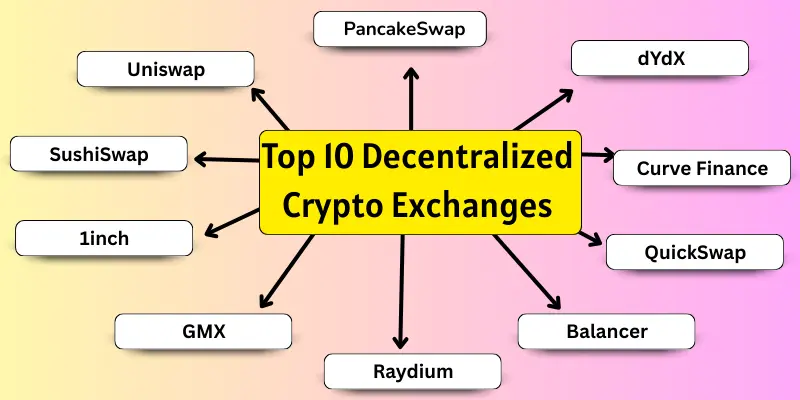
Top 10 decentralized crypto exchanges
Decentralized Crypto Exchanges let users trade crypto directly from their wallets without any middleman. They are safe, private, and give you full control over your funds. Here are the top Decentralized Crypto Exchanges:
- Uniswap
- PancakeSwap
- dYdX
- SushiSwap
- Curve Finance
- 1inch
- GMX
- Raydium
- Balancer
- QuickSwap
1. Uniswap
Uniswap is one of the most popular decentralized exchanges in the world. It started in 2018 and runs on the Ethereum blockchain. It lets users trade crypto directly from their wallets. No company controls it. It uses smart contracts and has become one of the largest DEX platforms over time.
Key Features and Trading Volume Comparison
Uniswap offers strong tools for fast and safe trading. It uses an automated market maker system, where users trade using liquidity pools instead of order books. It has very high daily trading volume, which makes trading smooth and trusted.
Supported Chains and Tokens
Uniswap supports many networks and thousands of tokens. It works on Ethereum and Layer-2 networks like Arbitrum, Optimism, and Polygon. It supports ERC-20 tokens and many popular coins, allowing users to trade a wide range of crypto assets.
2. PancakeSwap
PancakeSwap is one of the biggest decentralized exchanges on the BNB Chain. It started in 2020. People love it because it is fast and has very low fees. Unlike other exchanges, PancakeSwap lets users trade directly from their wallets. It also allows earning rewards through farming and staking.
Key Features and Trading Volume Comparison
PancakeSwap uses liquidity pools instead of order books. Users can swap tokens easily and quickly. It has low fees, high liquidity, and lots of trading activity every day. Additional features such as farming, staking, and lotteries set it apart from other DEXs.
Supported Chains and Tokens
PancakeSwap works mainly on the BNB Chain. It supports BEP-20 tokens and many popular crypto coins. Users can trade many tokens, add liquidity, and earn rewards from farming or staking.
3. dYdX
Overview & History of dYdX
dYdX is a decentralized exchange focused on advanced crypto trading. It started in 2017 and became popular for margin and perpetual trading. Users can trade directly from their wallets without a central authority. It runs on Ethereum and some Layer-2 networks, making transactions faster and cheaper.
Key Features and Trading Volume Comparison
dYdX offers derivatives, margin trading, and perpetual contracts. It uses an order book model instead of liquidity pools. Traders can borrow and lend crypto for advanced strategies. It has high trading volume in derivatives markets. This makes it popular among serious traders.
Supported Chains and Tokens
dYdX works on Ethereum and Layer-2 networks like StarkEx. It supports major cryptocurrencies like ETH, BTC, and USDC. Users can trade derivatives for these tokens and enjoy faster, cheaper transactions than on the Ethereum mainnet.
4. SushiSwap
SushiSwap is a decentralized exchange that started in 2020. It is a fork of Uniswap that has added more features. Users can trade crypto directly from their wallets. It also allows staking, yield farming, and earning rewards with SUSHI tokens.
Key Features and Trading Volume Comparison
SushiSwap uses liquidity pools for trading instead of order books. Users can swap tokens quickly and provide liquidity to earn fees. It also offers farming, staking, and governance voting. Its high trading volume makes it reliable for crypto traders.
Supported Chains and Tokens
SushiSwap works on Ethereum and many other blockchains like Polygon, Fantom, and Avalanche. It supports ERC-20 tokens and many popular coins. Users can trade a wide variety of crypto and participate in farming and staking for extra rewards.
5. Curve Finance
Curve Finance is a decentralized exchange mainly for stablecoins. It started in 2020. It is designed to let users swap stablecoins with very low fees and minimal price changes. Curve is popular among DeFi users for safe and efficient trading.
Key Features and Trading Volume Comparison
Curve uses special liquidity pools to keep trading smooth. It offers very low fees and low slippage. Users can provide liquidity and earn rewards. It has a high trading volume in the stablecoin market. This makes it one of the most trusted DEXs for stablecoins.
Supported Chains and Tokens
Curve works on Ethereum and Layer-2 networks like Arbitrum and Optimism. It primarily supports stablecoins such as USDC, DAI, and USDT, as well as some wrapped tokens. Traders can swap these coins quickly and at low cost.
6. 1inch
1inch is a decentralized exchange aggregator. It started in 2019. It finds the best prices for crypto swaps across many DEXs. Traders can get better deals without switching platforms. It became popular for saving fees and reducing slippage.
Key Features and Trading Volume Comparison
1inch splits orders across different exchanges for the best price. It supports limit orders, token swaps, and liquidity provision. It also has its own token, 1INCH, for rewards and governance. Its trading volume is high because it offers efficient trading.
Supported Chains and Tokens
1inch works on Ethereum, Binance Smart Chain, Polygon, and other networks. It supports many popular tokens like ETH, USDT, and DAI. Users can trade many tokens at competitive prices using its aggregator system.
7. GMX
GMX is a decentralized exchange that focuses on leveraged and derivatives trading. It started in 2021. Traders can open positions with up to 30x leverage. GMX uses smart contracts, so users stay in control of their funds. It is popular among advanced traders.
Key Features and Trading Volume Comparison
GMX allows spot and perpetual trading with low fees. It uses a multi-chain liquidity pool for smooth transactions. Users can stake GMX tokens to earn rewards. Its trading volume is growing quickly because it offers safe leverage and derivatives.
Supported Chains and Tokens
GMX works on Arbitrum and Avalanche networks. It supports popular tokens like ETH, BTC, and stablecoins. Users can trade these tokens with leverage and participate in staking for extra earnings.
8. Raydium
Raydium is a decentralized exchange built on the Solana blockchain. It started in 2021. Raydium offers very fast, low-cost trading because Solana is a high-speed blockchain. It also connects to the Serum order book, giving users access to more liquidity.
Key Features and Trading Volume Comparison
Raydium uses liquidity pools and connects to Serum’s order book. Traders can swap tokens quickly and earn rewards by providing liquidity. It supports staking and yield farming. Its trading volume is high on the Solana network due to its speed and low fees.
Supported Chains and Tokens
Raydium works on Solana and supports SPL tokens. Users can trade popular tokens like SOL, USDC, USDT, and other Solana-based coins. It also supports farming and staking for extra rewards.
9. Balancer
Balancer is a decentralized exchange and automated portfolio manager. It started in 2020. Users can trade crypto and also create liquidity pools with multiple tokens. Balancer allows flexible pool designs and earns fees for liquidity providers.
Key Features and Trading Volume Comparison
Balancer uses smart pools and weighted liquidity pools. Traders can swap tokens with low fees and low slippage. Users can earn rewards by providing liquidity. Its trading volume is moderate but growing steadily due to its flexible pools and user-friendly interface.
Supported Chains and Tokens
Balancer works on the Ethereum and Polygon networks. It supports ERC-20 tokens and popular coins. Users can trade many crypto assets and create or join pools for earning fees and rewards.
10. QuickSwap
QuickSwap is a decentralized exchange on the Polygon network. It started in 2020. QuickSwap is popular because it offers very low fees and fast transactions. It allows users to swap tokens and participate in DeFi activities easily.
Key Features and Trading Volume Comparison
QuickSwap uses liquidity pools for trading instead of order books. Traders can swap tokens quickly with minimal fees. It also offers yield farming and staking opportunities. Its trading volume is high on Polygon due to its low fees and speed.
Supported Chains and Tokens
QuickSwap works mainly on the Polygon network. It supports ERC-20 and Polygon-based tokens like MATIC, USDC, and USDT. Users can trade many tokens and earn rewards through farming and staking.
Conclusion
So friends, it’s time to finish up! In this article, we’ve covered Top 10 Decentralized Crypto Exchanges in detail. We discussed their features, supported tokens, and trading methods. Understanding these platforms can help you trade crypto more safely and efficiently. Explore these DEXs and learn how they work to make informed trading decisions.
FAQs about the top Decentralized Crypto Exchanges
A decentralized exchange is a platform where you can trade crypto directly from your wallet. There is no central company controlling it. Users keep control of their funds and trade using smart contracts.
On a CEX, the platform holds your funds and handles trades. On a DEX, you trade directly from your wallet. DEXs are more private and less prone to hacks.
Fees depend on the blockchain used. For example, Ethereum can have high gas fees during busy times. Layer-2 networks or BNB Chain often have lower fees.
Slippage happens when the price changes between the time you place a trade and when it executes. Large trades in low-liquidity pools often face slippage. Always check slippage settings before trading.
DEXs run on many blockchains like Ethereum, BNB Chain, Polygon, Solana, and Avalanche. Some DEXs work on multiple networks at the same time. Always check which network your token is on to avoid mistakes.

- Be Respectful
- Stay Relevant
- Stay Positive
- True Feedback
- Encourage Discussion
- Avoid Spamming
- No Fake News
- Don't Copy-Paste
- No Personal Attacks
- Be Respectful
- Stay Relevant
- Stay Positive
- True Feedback
- Encourage Discussion
- Avoid Spamming
- No Fake News
- Don't Copy-Paste
- No Personal Attacks
