Types of crypto wallets
Published: 3 Jan 2026
When you start using cryptocurrency, one of the first things you must learn is the types of crypto wallets. Each crypto wallet works in a different way and offers unique benefits. Some are simple to use, while others provide extra safety. Knowing these types helps you manage your digital money with confidence.
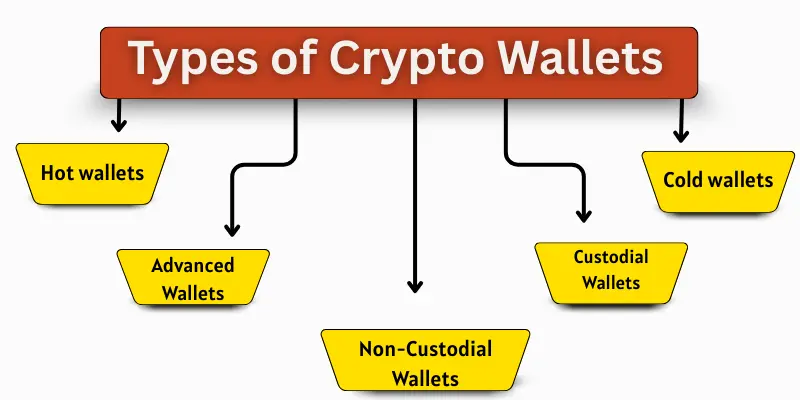
Different Types of Crypto Wallets
Many different types of crypto wallets help you store and protect your digital money. Each wallet type works differently and offers a different level of safety and control. Main types of crypto wallets
- Hot wallets
- Cold wallets
- Custodial Wallets
- Non-Custodial Wallets
- Advanced Wallets
1. Hot Wallets
These wallets are connected to the internet. You can use them on your phone, computer, or browser. They let you send and receive crypto quickly. They are easy and fast to use. But because they are online, hackers can try to steal your crypto, so you must be careful.
Types of hot wallets
Here are some types of hot wallets.
- Mobile Wallets: Wallets you use on your phone.
- Desktop Wallets: It is installed on your computer.
- Web Wallets: Wallets you access through a browser online.
2. Cold Wallets
Cold wallets are offline. They are not connected to the internet, so hackers cannot easily access them. You can store large amounts of crypto safely for a long time. They are slower to use than hot wallets, but very secure. Cold wallets are best for keeping crypto safe for months or years.
Types of Cold Wallets:
- Hardware Wallets: It is a Physical devices that store crypto offline.
- Paper Wallets: Printed copies of your private and public keys.
- Brain Wallets: Store your private key in your memory using a secret phrase.
3. Custodial Wallets
A company controls custodial wallets. You do not hold the private keys yourself. The company keeps your crypto safe. They are easy to use for beginners. But you must trust the company to keep your crypto secure.
4. Non-Custodial Wallets
You control all the keys in a non-custodial wallet. No company manages your crypto. You can send and receive crypto anytime. This type gives you full control, but you must keep your keys safe.
5. Advanced Wallets
Advanced wallets are for experienced users. They give extra security and special features. They keep your crypto safe and make it easier to manage.
Types of Advanced Wallets:
- Multi-Signature Wallets: More than one person must approve a transaction.
- Smart Contract Wallets: Wallets that work automatically with blockchain rules.
How to Choose the Best Crypto Wallet?
Choosing the right crypto wallet is very important. A good wallet keeps your crypto safe. It also makes it easy to use. You should think about security, convenience, and the type of crypto you have. Here are some simple tips to pick the best wallet:
- Check Security: Pick wallets with strong security features.
- Decide Hot or Cold: Hot wallets are easy to use. Cold wallets are safer for big amounts.
- Ease of Use: Beginners should choose simple wallets.
- Backup Options: Ensure the wallet provides a seed phrase or backup method.
- Supported Cryptocurrencies: Choose a wallet that supports your coins.
- Reputation: Use wallets from trusted companies or developers.
Best Crypto Wallets
Crypto wallets help you store, send, and receive your crypto safely. Choosing a good wallet makes your digital money secure and easy to use. Many wallets offer fast transactions, strong security, and easy access for beginners and experts alike. Here are some of the best crypto wallets:
- MetaMask: Wallet for Ethereum that works on phones and browsers.
- Trust Wallet: Mobile wallet, supports many coins.
- Coinbase Wallet: Beginner-friendly and easy to use.
- Exodus: Supports many cryptocurrencies in one place.
- Ledger Nano X: Hardware wallet, keeps keys offline.
- Trezor Model T: Trusted hardware wallet for long-term storage.
- Phantom: Wallet for Solana, good for NFTs.
- Rabby Wallet: Multi-chain wallet for DeFi users.
- Tangem Wallet: Card-style hardware wallet, easy offline use.
- SafePal: Hardware and software options in one wallet.
Note: Crypto wallets are constantly updated, and new wallets appear every year. Always check for the latest features and security before choosing a wallet.
Conclusion
Alright, everyone, let’s bring this to a close! We have covered Types of crypto wallets in depth. I suggest beginners focus on learning how wallets operate and what makes each type secure. Understand each feature clearly before using any wallet. Start exploring wallets and get comfortable with their functions!
FAQs about Types of Crypto Wallets
A custodial wallet is controlled by a company. They keep your crypto safe for you. You do not handle the private keys yourself.
A multi-signature wallet needs more than one person to approve transactions. It is useful for teams or groups. This prevents theft and mistakes.
A smart contract wallet works automatically with blockchain rules. It sends crypto when conditions are met. You do not need to approve every action manually.
A brain wallet stores your private key in your memory. You do not need any device or paper. But if you forget it, you lose access forever.
Yes, some wallets allow this. You can log in on your phone or computer. Make sure you use your recovery phrase safely.
Paper wallets are offline, so hackers cannot reach them. They are very safe if stored properly. But losing the paper means losing your crypto.
No, you cannot send crypto without a wallet. Wallets store your private keys. You need keys to send or receive digital money.
No, some wallets support only specific coins. You must check which crypto your wallet supports. Pick a wallet that works with your coins.
Use strong passwords and two-factor authentication. Keep your recovery phrase safe and private. Never share your private key with anyone.

- Be Respectful
- Stay Relevant
- Stay Positive
- True Feedback
- Encourage Discussion
- Avoid Spamming
- No Fake News
- Don't Copy-Paste
- No Personal Attacks
- Be Respectful
- Stay Relevant
- Stay Positive
- True Feedback
- Encourage Discussion
- Avoid Spamming
- No Fake News
- Don't Copy-Paste
- No Personal Attacks
