Difference between blockchain and crypto
Published: 20 Jan 2026
Did you know that the global cryptocurrency market is worth over $2 trillion, yet most people still confuse blockchain with crypto? Understanding the difference between blockchain and crypto is essential, as blockchain is the underlying technology that powers cryptocurrencies, while crypto refers to the digital assets built on it. In this article, we will break down both concepts in simple language for beginners.
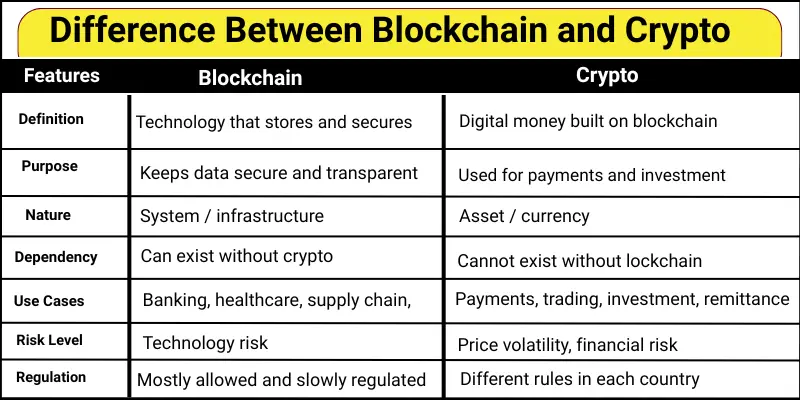
10 Difference between blockchain and crypto
Understanding the difference between blockchain and crypto is important for beginners. Here are 10 key differences you should know.
- Definition
- Purpose
- Nature
- Dependency
- Examples
- Use Cases
- Value
- Users
- Risk Level
- Regulation
1. Definition
Many people confuse blockchain and crypto. It is important to know the difference.
Blockchain:
Blockchain is a technology. It stores and secures data. People use it to keep records safe. Companies and developers build systems on it. It works like a digital notebook that everyone can trust.
Crypto:
Crypto is digital money. It runs on blockchain technology. People can use it to pay or trade online. Bitcoin and Ethereum are examples of crypto. Crypto has value, and people can buy or sell it.
2. Purpose
Blockchain and crypto have different goals.
Blockchain:
Blockchain’s main purpose is to store data safely. It keeps records clear and honest. People use it for many tasks, not just money. It helps businesses and governments track information.
Crypto:
Crypto’s main purpose is to enable payments and online trading. People use it to send money fast. Some also use it to invest. Crypto helps people buy things without banks.
3. Nature
Blockchain and crypto are different in nature.
Blockchain:
Blockchain is a system or technology. It is like a digital notebook or ledger. People build programs and apps on it.
Crypto:
Crypto is an asset or money. People can hold it, spend it, or trade it. It depends on blockchain to work.
4. Dependency
Blockchain and crypto do not work the same way.
Blockchain:
Blockchain can exist without crypto. People use it for other purposes too. Banks, schools, and companies can use it.
Crypto:
Crypto cannot exist without blockchain. It needs blockchain to run and be secure. Every cryptocurrency uses blockchain technology.
5. Examples
Examples help us better understand blockchain and crypto. Here are some common ones.
Blockchain:
Ethereum, Hyperledger, and Ripple are examples of blockchain technologies. People use them to store data. Companies also build apps on these blockchains.
Crypto:
Bitcoin, Ethereum, and USDT are examples of crypto. People buy, sell, or trade them online. Crypto is money that lives on blockchain.
6. Use Cases
It is important to know how people use blockchain and crypto.
Blockchain:
Blockchain is used in banking, healthcare, supply chain, and voting. It helps keep records safe. Businesses and governments trust it.
Crypto:
Crypto is used for payments, trading, and investment. People send money across the world. Some also buy items or services with crypto.
7. Value
Blockchain and crypto have different value types.
Blockchain:
Blockchain itself has no money value. It is only a system. People use it to store and secure data.
Crypto:
Crypto has market value. People can buy, sell, and trade it. Its value changes every day.
8. Users
Different people use blockchain and crypto for different reasons.
Blockchain:
Companies, developers, and governments use blockchain. They build systems and apps on it. It helps them store data safely.
Crypto:
Investors, traders, and people use crypto. They buy, sell, or use it to pay online. Crypto is easy to transfer worldwide.
9. Risk Level
Blockchain and crypto have different risks.
Blockchain:
Blockchain is mostly safe. Its risk is technical. Problems may come if the code has mistakes.
Crypto:
Crypto is risky. Its price changes fast. People can lose money if they trade without care. Scams also exist in crypto.
10. Regulation
Rules for blockchain and crypto are not the same.
Blockchain:
Blockchain is mostly allowed. Governments slowly make rules for it. Many countries accept its use.
Crypto:
Crypto rules vary from country to country. Some countries allow it. Others restrict or ban it. People must check the laws before using crypto.
Blockchain vs Crypto: Which Is Better?
Many people ask which is better: blockchain or crypto. The answer depends on what you want.
Which is better?
If you want security and technology, blockchain is the better choice. If you want money and trading, crypto is better. Both are useful in their own way. Beginners can start by learning about blockchain, then use crypto carefully.
Conclusion
So guys, it’s time to finish up! In this article, we’ve covered Blockchain vs Crypto in detail. My personal recommendation is to first understand blockchain well, because it is the technology behind everything. Once you know blockchain, using crypto becomes much easier and safer. If you found this article helpful, don’t forget to share it and start exploring blockchain and crypto today!
FAQs about crypto vs blockchain
Blockchain keeps all crypto transactions safe and clear. It makes sure no one can cheat. Without blockchain, crypto cannot exist.
Yes, but carefully. Start with small amounts and learn first. Never invest money you cannot afford to lose.
No, blockchain is not just for money. Companies use it to track products, health records, and votes. It is a system for secure data.
Yes, crypto works worldwide. You can send money fast without banks. But always check the wallet address carefully.
No, you do not need a bank. Crypto works on blockchain, so you can send or receive money online. All you need is a crypto wallet.
No, crypto rules are different in each country. Some countries allow it, some restrict it. Always check local laws before using crypto.

- Be Respectful
- Stay Relevant
- Stay Positive
- True Feedback
- Encourage Discussion
- Avoid Spamming
- No Fake News
- Don't Copy-Paste
- No Personal Attacks
- Be Respectful
- Stay Relevant
- Stay Positive
- True Feedback
- Encourage Discussion
- Avoid Spamming
- No Fake News
- Don't Copy-Paste
- No Personal Attacks
